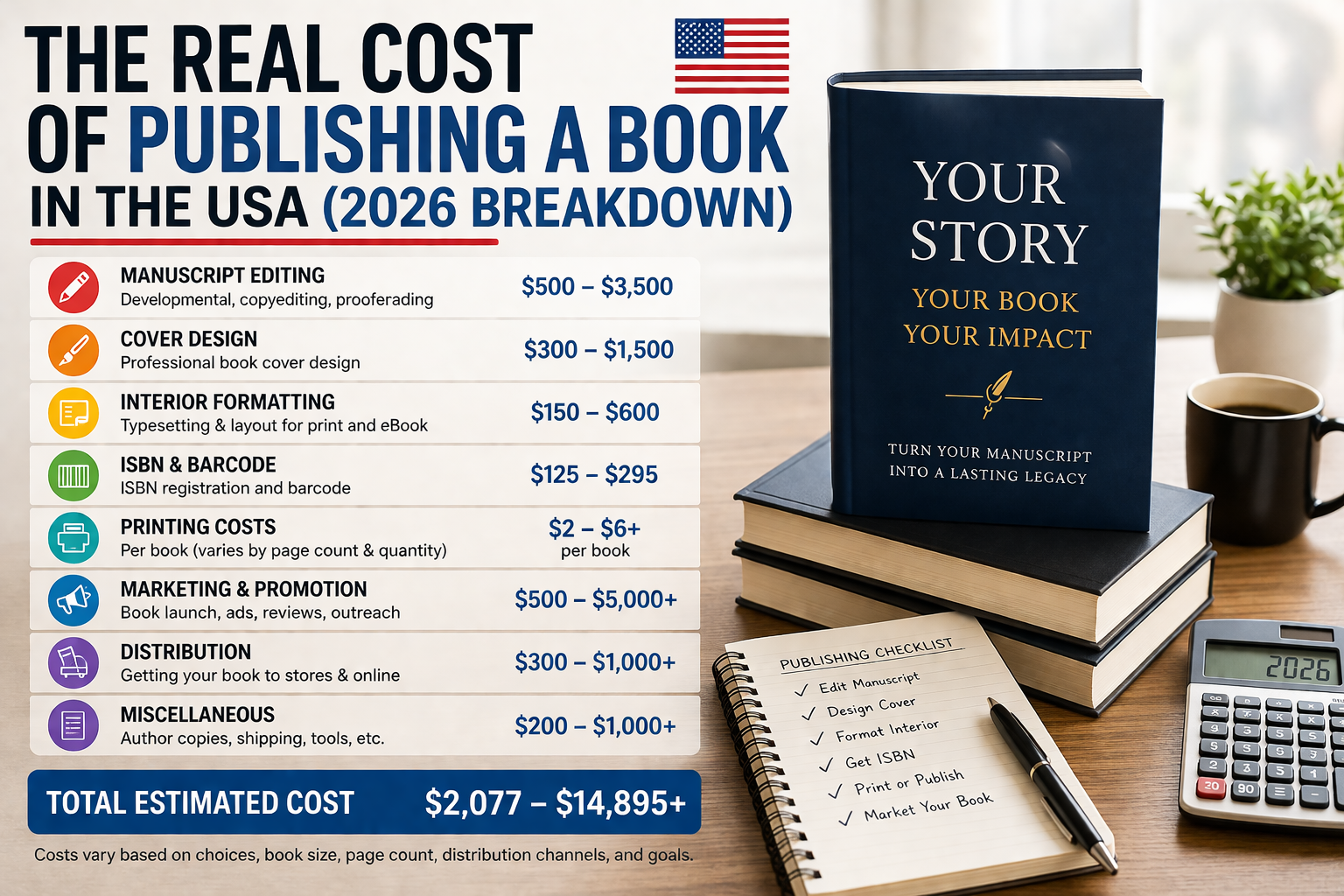
Before you commit to publishing your book, you want to know one thing: what is this going to cost me? It’s a completely reasonable question — and one that the publishing industry has historically been terrible at answering clearly. Vague phrases like “it depends” and “packages start from” are everywhere. Actual numbers are hard to find.
This guide cuts through that. We’re going to give you real cost ranges for every stage of the book publishing process in the United States in 2026 — from manuscript editing to cover design, formatting, distribution, and marketing — so you can plan your budget with confidence and make informed decisions about where to invest and where cutting corners will cost you far more than it saves.
| How to Use This Guide The ranges below reflect what you can realistically expect to pay for professional-quality services in the US market in 2026. “Budget” means serviceable but limited. “Mid-range” represents the sweet spot most authors should aim for. “Premium” reflects top-tier talent or full-service agency pricing. We’ll flag which stages are worth the premium and which are fine at mid-range. |
The Six Cost Categories of Publishing a Book
Publishing a book involves six distinct cost areas. Some are essential and non-negotiable; others depend on your goals, genre, and distribution strategy. We’ll cover each in order of when it typically appears in the publishing process.
1. Editing
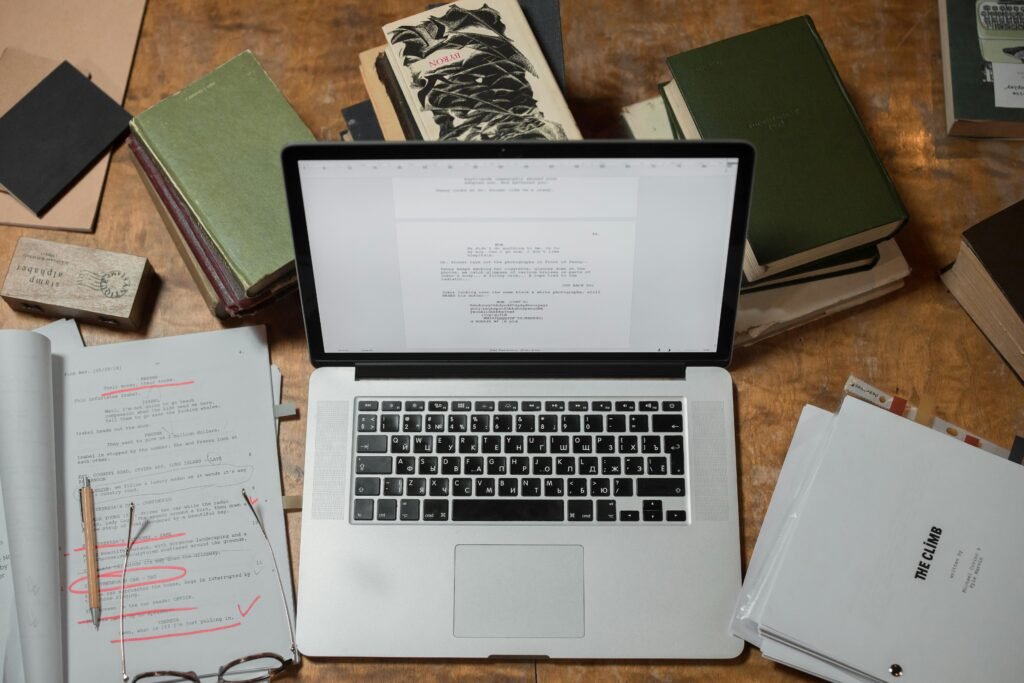
Editing is the single most important investment you can make in your book — and the one most authors either underestimate or try to skip. A professionally edited book is not a nicety; it is the baseline standard readers expect. Poor editing is the most common reason for negative reviews and a book’s failure to gain traction.
There are three distinct editing stages, each serving a different purpose:
Developmental Editing
Developmental editing is the big-picture pass. Your editor evaluates the overall architecture of the book: Does the argument hold together? Is the narrative compelling from beginning to end? Are chapters in the right order? Does the pacing work? Are there gaps, redundancies, or sections that undermine the book’s core promise?
This is the most intellectually demanding form of editing and typically the most expensive. It is also the most valuable — catching structural problems before copyediting and design saves enormous time and money downstream.
Copy Editing
Copy editing works at the sentence and paragraph level: clarity of expression, word choice, grammar, consistency, style, and flow. A good copy editor doesn’t just fix errors — they elevate your prose and ensure your voice comes through cleanly and consistently throughout the manuscript.
Proofreading
Proofreading is the final pass before the manuscript goes to layout. It catches residual typos, punctuation errors, and formatting inconsistencies. It is not a substitute for copy editing — it is the last quality check before the book is locked for production.
| Service | Budget Range | Mid-Range | Premium |
| Developmental Edit | $1,500–$3,500 | $3,500–$7,000 | $7,000–$15,000+ |
| Copy Editing | $800–$2,000 | $2,000–$5,000 | $5,000–$10,000 |
| Proofreading | $400–$900 | $900–$2,000 | $2,000–$4,000 |
| All Three Stages (bundled) | $2,500–$5,000 | $5,000–$12,000 | $12,000–$25,000+ |
Rates vary by manuscript length and genre. Figures above are based on a standard 60,000–80,000 word manuscript. Children’s books and shorter non-fiction cost considerably less; research-heavy manuscripts can cost more.
Worth the premium? Yes, for developmental editing — especially if this is your first book or your manuscript is complex. Copy editing and proofreading are well-served at mid-range with an experienced professional.
2. Cover Design

Your cover is your book’s most powerful marketing asset. It communicates genre, quality, and tone in under a second — and readers absolutely make purchasing decisions based on it. Cover design pricing varies enormously based on the designer’s experience, the complexity of the design, whether it requires custom illustration, and whether you need both a print cover (with spine and back) and an ebook version.
| Service | Budget Range | Mid-Range | Premium |
| Ebook Cover Only | $200–$500 | $500–$1,200 | $1,200–$3,000 |
| Print + Ebook Cover | $400–$900 | $900–$2,500 | $2,500–$6,000+ |
| Cover with Custom Illustration | $800–$2,000 | $2,000–$5,000 | $5,000–$15,000+ |
| Full Cover + Interior Branding | $1,200–$3,000 | $3,000–$7,000 | $7,000–$20,000 |
Worth the premium? For most authors, mid-range cover design from a specialist in your genre is the right investment. Premium matters most for children’s books with full custom illustration, high-profile professional books, and any book where visual branding extends across a series or author platform.
3. Interior Formatting and Layout

Interior formatting transforms your edited Word document into a properly laid-out book — with professional typography, correct margins and gutters, consistent chapter headers, and proper treatment of all front and back matter. For print books, this includes preparing the print-ready PDF at your specific trim size. For ebooks, it means creating a clean, reflowable ePub or MOBI file.
| Service | Budget Range | Mid-Range | Premium |
| Ebook Formatting Only | $100–$300 | $300–$700 | $700–$1,500 |
| Print Interior Formatting | $200–$600 | $600–$1,500 | $1,500–$3,500 |
| Print + Ebook (both formats) | $350–$900 | $900–$2,000 | $2,000–$4,500 |
| Complex layout (tables, diagrams, etc.) | $600–$1,500 | $1,500–$3,500 | $3,500–$7,000+ |
Worth the premium? Most standard non-fiction and narrative books are well-served at mid-range. Premium is justified for books with complex layouts: heavily illustrated works, textbooks, cookbooks, how-to guides with frequent diagrams, and coffee-table books.
4. ISBN, Copyright, and Publishing Setup

These are the administrative costs of putting your book into the publishing ecosystem. They are relatively modest but essential.
| Item | Typical Cost in 2026 |
| Single ISBN (Bowker, USA) | $125 |
| Block of 10 ISBNs | $295 |
| Block of 100 ISBNs | $575 |
| US Copyright Registration | $35–$65 (online filing) |
| KDP Publishing Setup | Free |
| IngramSpark Setup Fee | $49 per title (print + ebook) |
| IngramSpark Title Revision Fee | $25 per revision |
| LCCN (Library of Congress) | Free (application required) |
Note: Amazon KDP and IngramSpark offer free ISBNs, but these list the platform as your publisher of record. For authors building a serious publishing imprint or professional author brand, purchasing your own ISBNs through Bowker is the right move.
5. Marketing and Launch

Book marketing is the most variable cost category — the range between doing almost nothing and running a full professional campaign is enormous. Here is a realistic breakdown of the most common marketing investments:
| Service | Budget Range | Mid-Range | Premium |
| Author Website (design + setup) | $300–$800 | $800–$3,000 | $3,000–$8,000+ |
| Amazon Advertising (monthly) | $100–$300/mo | $300–$800/mo | $800–$3,000+/mo |
| Book Launch PR Campaign | $1,500–$4,000 | $4,000–$10,000 | $10,000–$30,000+ |
| Book Marketing Consultant (project) | $1,000–$3,000 | $3,000–$8,000 | $8,000–$25,000+ |
| NetGalley / ARC Distribution | $450–$700/listing | N/A | N/A |
| Social Media Advertising (monthly) | $200–$500/mo | $500–$2,000/mo | $2,000–$8,000+/mo |
The most important marketing truth: marketing is not optional if you want your book to reach readers. Even the best book in the world needs to be found. For authors publishing to build a professional brand or generate business leads, a proper launch investment typically delivers substantial ROI — a well-marketed book can drive inbound inquiries and speaking opportunities for years.
6. Ghostwriting (If Applicable)

If you’re working with a professional ghostwriter to produce your manuscript, this is typically the largest single cost in the publishing process. Professional rates reflect the skill, time, and research required to produce a book-length work that genuinely captures your voice and expertise.
| Service | Budget Range | Mid-Range | Premium |
| Short Business Book (30K–40K words) | $15,000–$25,000 | $25,000–$45,000 | $45,000–$80,000+ |
| Standard Non-Fiction (50K–65K words) | $20,000–$35,000 | $35,000–$65,000 | $65,000–$120,000+ |
| Memoir / Expert Book (65K–85K words) | $30,000–$50,000 | $50,000–$90,000 | $90,000–$150,000+ |
These figures reflect experienced US-based ghostwriters. Rates on offshore platforms are lower, but quality, voice capture, and reliability vary significantly. For a book attached to your professional brand, the quality of the ghostwriting directly impacts the quality of the book — and what it communicates about you.
Total Budget Ranges by Author Profile
Putting it all together, here are realistic total budget ranges for three common author profiles:
| Author Profile | What’s Included | Realistic Total Budget |
| First-time author, self-publishing non-fiction (no ghostwriting) | Copy edit + proofread, mid-range cover, basic formatting, KDP setup, minimal marketing | $3,500–$8,000 |
| Professional / executive author with ghostwriting | Ghostwriting, full editing stack, premium cover, print + ebook formatting, IngramSpark, launch marketing | $40,000–$90,000+ |
| Business author, self-written, full-service publishing | Full editing stack, premium cover, formatting, ISBN, launch campaign, ongoing Amazon ads | $12,000–$30,000 |
| The Investment Perspective A professionally published book attached to a business or professional brand is not purely a cost — it is an asset. Authors report speaking fee increases, inbound client inquiries, media opportunities, and partnership conversations that were directly traceable to their book. A well-published book typically returns its investment many times over. |
Where First-Time Authors Overspend and Underspend
Here are some of the most common overspend and underspend factors for authors.
Common overspends
- Paying for premium distribution services that offer no advantage over direct KDP and IngramSpark setup
- Purchasing large quantities of author copies before the book has been validated with readers
- Investing in expensive PR campaigns before building a baseline of reviews and sales momentum
Costly underspends
- Skipping developmental editing and discovering structural problems after the book is published
- Using a DIY or budget cover that signals amateur quality and suppresses sales from day one
- Underinvesting in launch marketing and expecting organic discovery to do the work — it rarely does
Frequently Asked Questions
Can I publish a book for under $1,000?
Technically, yes — but not at a standard that competes in the current market. At under $1,000 you’re typically choosing between professional editing and a professional cover, not funding both. You can use free KDP ISBNs, DIY formatting with a template, and publish without marketing spend. The result will likely be a book that doesn’t generate significant sales or build your reputation meaningfully. For a book attached to your professional brand, this is a false economy.
Are there hidden costs in book publishing I should know about?
The most common surprises are: IngramSpark’s per-revision fees (which add up if your manuscript isn’t locked before upload), the cost of author copies for review purposes, ongoing Amazon advertising spend that many authors don’t budget for, and website hosting and maintenance. Always ask your publishing partner to walk through the full cost picture including post-publication expenses before you start.
Does traditional publishing cost the author anything?
No — in traditional publishing, the publisher funds editing, design, formatting, and distribution. The trade-off is that you receive an advance (often modest for debut authors) and royalties of 10–15% of cover price, versus 35–70% for self-published authors. Traditional publishing also involves a lengthy acquisition process, often taking 1–3 years from manuscript to bookstore. Most professionals who want to publish within a reasonable timeframe and retain creative control choose self-publishing or a hybrid model.
What is hybrid publishing and how does it affect costs?
Hybrid publishing sits between traditional and self-publishing: a hybrid publisher provides professional services (like a traditional publisher) but the author pays for those services (like self-publishing). The author retains higher royalties and more creative control than in traditional publishing, but invests upfront. Quality among hybrid publishers varies enormously — always ask to see their published books and check their distribution reach before signing a contract.
Can Bookpress Publications give me a customized cost estimate?
Yes — absolutely. Every project is different, and cookie-cutter pricing rarely reflects the actual scope of what your book needs. Bookpress offers a free initial consultation where we review your manuscript, your publishing goals, and your timeline, and provide a clear, itemized estimate for each stage of the process. No vague packages — just transparent pricing for exactly what your project requires.
Budget With Confidence. Publish With Purpose.
The cost of publishing a book is real — and for a professionally produced book that builds your brand, it is a meaningful investment. But it is not an opaque or unknowable one. Every stage has a market rate, every rate reflects a quality level, and every quality level has consequences for how your book performs and what it communicates about you.
The authors who get the best returns on their publishing investment are the ones who go in with clear expectations, invest in the stages that matter most, and work with a team that has done this before.
Ready to get a real, itemized estimate for your book? Book a free consultation with Bookpress Publications and we’ll walk through your specific project — manuscript length, genre, timeline, and goals — and give you an honest, detailed picture of what it will take to publish your book to a professional standard.
Leave a Reply